We've made a recording of this event free to all. Please support our institution and these productions by making a tax-deductible contribution.
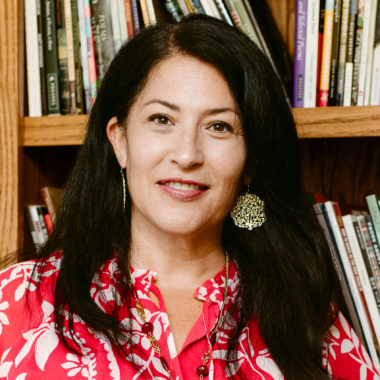
It is not just by reading poetry that we understand its power, it is in its performance. Join us for an evening with United States Poet Laureate Ada Limón and Alexis Madrigal as we experience the transformative possibilities of poetry.
Ada Limón’s poems expertly combine brilliant observations of our complex world with a tender sincerity. As Poet Laureate of the United States (currently serving her second term), Limón has focused on using poetry to connect us more strongly with the natural world. Her awards include a Guggenheim Fellowship, the National Book Critics Circle Award, and a MacArthur Fellowship. Most recently, she composed a poem to be engraved on NASA’s Europa Clipper Spacecraft, which will be launched to the second moon of Jupiter in October 2024. Limón was raised in Sonoma, California.
Alexis Madrigal is co-host of KQED’s Forum and a contributing writer at The Atlantic. He helped found the COVID Tracking Project and was previously the editor-in-chief of Fusion. He is currently working on a book about Oakland and the Bay Area’s revolutionary ideas.
Books Referenced:
- You Are Here: Poetry in the Natural World by Ada Limon
- The Hurting Kind by Ada Limon
Poems Referenced:
- “Lover” by Ada Limon
- “In Praise of Mystery: A Poem for Europa” by Ada Limon
- “The Burying Beetle” by Ada Limon
- “What It Looks Like To Us and the Words We Use” by Ada Limon
- “Salvage” by Ada Limon
- “Forsythia” by Ada Limon
- “Relentless” by Ada Limon
- “Joint Custody” by Ada Limon
- “How to Triumph Like a Girl” by Ada Limon
Persons Referenced:
- Joy Harjo – poet
- Tracy K. Smith – poet
- Juan Felipe Herrera – poet
- Natasha Tretheway – poet
- Gwendolyn Brooks – poet
- W. S. Merwin – poet
- Elizabeth Terwilliger – activist
- Lauren Groff – author
TRANSCRIPT
Alexis Madrigal: Hello. Hey everyone.
I’m Alexis Madrigal. I’m the co-host of Forum on KQED. Ada Limon is one of my favorite people. She’s the poet laureate of the United States. Yes. Really as a title, it’s up there with astronaut, Lion Tamer, it’s up there. But one thing I love about her story is that she’s really from here, she grew up in Sonoma.
And because she’s young, she had an experience of Sonoma that like you might have had too, in fact, if you’d happened to wander to a little bookstore that’s off the town square in Sonoma, you might’ve seen her working in there, reading, restocking the shelves, setting things up for some event, and there’s something thrilling about that for me, not just about the past, but about our present now.
Right now, any of you could have had an experience this very day that you’ll remember, like when you write that book or you deliver that poem or you make that art. That is to say, Ada Limon, for those of us who live here, is a reminder that greatness walks among us, learns from the same fields and valleys, takes images from the same scenes that you too have glimpsed between the hills and the ocean.
Please welcome from Sonoma to the actual and literal world, Ada Limon.
Ada Limon: Thank you. Thank you.
Alexis Madrigal: Also, I hope it’s okay. Ada knows, but she’s going to read a lot of poetry tonight. We got a thick packet of poems here. And we’re going to come back to Sonoma. But first, poet laureate. What is that like?
Ada Limon: Yeah.
Alexis Madrigal: What is it to be the poet laureate?
Ada Limon: Yeah. It’s a wonderful question and I’m still trying to figure it out.
It’s such an interesting job and anyone who guides you into the role will tell you that you make it whatever it is. So you fill it in however you can. And so, Joy Harjo filled it in her beautiful way, and Tracy k Smith, and Juan Felipe Herrera, Natasha Tretheway, Gwendolyn Brooks, all of these incredible people.
And so one of the things that I have held in my heart was not only the legacy of the Laureateship itself, but also what it is to advocate for poetry.
Alexis Madrigal: Yeah.
Ada Limon: And what is it to advocate for libraries and for reading and for words and for language and the failure of language, which poetry is also about.
And so for me it’s really been a role of advocacy and in that way I hope it’s a role in which I’m lifting everyone up.
Alexis Madrigal: Do you think it’s changed your relationship to poetry?
Ada Limon: Yes and no. I think the biggest way is that I’ve had to articulate why poetry matters. More than ever in my life.
And you know, as an artist, and I really am, for the most part, most comfortable in my artist role, making something, making an offering, creating something. And so then to be given a role in which for the most part you’re asked, why poetry? Why does it matter? Why is it important?
And so the gift of the role has really been that re-articulating, re-articulating as to what poetry means. And that has been surprising to me because it shifted. And I think the thing that,
Alexis Madrigal: How so? Like you used to give a different answer at the beginning and now you give a new one?
Ada Limon: I think that there are times where I feel like, I don’t know what poetry can do. I would love to say it could save everyone, I’d love to say it could feed people.
I would love to say all of these things, but I think in reality, what it can do for us is on so many levels, individual and unique, and we have to have our own journey with it in order to have a true holistic experience with poetry.
Alexis Madrigal: Well, what about, do you think being the Poet Laureate had changed your relationship to what you yourself can write? Can you still write a spicy poem and then put it out as poet laureate in this way?
Ada Limon: Hell yeah. Yes. I will say though, yes, but. Yes and.
I do have a lot of poems that I’m working on privately. They are private poems.
Alexis Madrigal: Post Laureate edition.
I have wondered though, because one thing I love about poets is I feel like they actually can get quite catty about each other’s work. You go to North Beach, you ask them about the Instagram poets and they’re like, “ugh,” and you can’t really be mean about poetry now. You have to be nice about it all.
Ada Limon: Yeah. It’s true. It’s true. The interesting thing, and actually those friends who have known me for a long time will tell you that I have always been accused as a person that defends and loves all poetry. I really am that person. I’m the person who’s like, that’s great, so they make a poem and they put it online, that’s awesome. And everyone’s like, Ugh, can’t you judge it?
And I keep thinking, oh, so you make something. I’m not going to be mad. It’s like being mad at flowers. Oh, there’s too many flowers in the world. I feel like if you make a poem, good for you. I want to celebrate that.
Alexis Madrigal: That is a great answer. So you became poet laureate during a pretty weird time, the not-ever quite over pandemic period, and I thought maybe you could read a poem that felt to me quite reflective of that time. And it is called “Lover.” If you want to set it up any more, you can do that.
Ada Limon: Yeah. I think this was at a time when we were doing everything virtually if we were allowed that privilege to do things virtually. I had many friends in roles in which they were working full-time in person.
And this was a poem in which I was trying to struggle with finding a little bit, hard to say hope, but a little bit of leaning in, leaning back into the world when I felt so removed from it. And it began with this word which is the title of the poem.
“Lover.
Easy light storms in through the window, soft
edges of the world, smudged by mist, a squirrel’s
nest rigged high in the maple. I’ve got a bone
to pick with whomever’s in charge. All year,
I’ve said, You know what’s funny? And then,
Nothing, nothing is funny. Which makes me laugh
in an oblivion-is-coming sort of way. A friend
writes the word lover in a note and I’m strangely
excited for the word lover to come back. Come back
lover, come back to the five and dime. I could
squeal with the idea of blissful release, oh, lover,
what a word, what a world, this gray waiting. In me,
a need to nestle deep into the safe-keeping of sky.
I am too used to nostalgia now, a sweet escape
of age. Centuries of pleasure before us and after
us, still right now, a softness like the worn fabric of a nightshirt
and what I do not say is, I trust the world to come back.
Return like a word, long forgotten and maligned
for all its gross tenderness, a joke told in a sun beam,
the world walking in, ready to be ravaged, open for business.”
Alexis Madrigal: I think hearing you read this poem and thinking about what poetry can do and thinking about some of my favorite poems being from a thousand years ago or three thousand years ago, you think to yourself, I trust the world to come back. Poetry does feel like it builds that trust.
That there are going to be individual humans, like looking out at the world thinking things. And at least that much will remain.
Ada Limon: Yeah. I think that there’s a lot of ways in which poetry can be somewhat of an incantation or a spell, and that when you need something, you can write a poem and manifest it in some ways.
And so what I needed was to feel connected and I wrote the poem that made me feel connected. And I think sometimes as the reader on the other side of that poem, you can hope that that will do the same thing. And I think that’s been going on forever.
Alexis Madrigal: What do you think it was about the word “lover” that sparked that?
Ada Limon: Oh, I just think it’s a controversial word. There are people that cringe at that, where I have friends that say: Lover? Oh, it’s the worst. And then I have other friends like: Oh yeah, ooh, he’s my lover. And then other friends: Oh God, don’t ever say that. So I like when a word has a strong reaction to it.
Alexis Madrigal: There’s still power in there, right?
Ada Limon: There’s something about it. Yeah.
Alexis Madrigal: You have also gotten to do something that is just so cool and so interesting and so otherworldly that we need to talk about it. How many people here love the moon of Jupiter Europa?
No? Okay. I do love this moon. One reason is that it may have a big liquid ocean, right? And so, as part of your, was it actually part of your poet laureate-dom or did NASA just call you up and was like, Ada, we need a poem.
Ada Limon: Yes. NASA called, well, they didn’t call me up, but they emailed me.
Alexis Madrigal: Ada, we need a poem. Best, NASA.
Ada Limon: I’m not making that up. It sounds like I’m a pathological liar at this moment. And the first line, it said Bert from NASA here, which I love. becauseI was like, yeah, if my name was Bert and I worked for NASA,
Alexis Madrigal: He worked very hard in grad school to be able to say that.
Ada Limon: I would walk into a room and be like, Bert from NASA here.
He asked me if I would write a poem that would be engraved on the spacecraft, the Europa Clipper that would travel 1.8 billion miles to the second moon of Jupiter. And I said yes.
And then I thought, oh no, now I have to write this poem.
Alexis Madrigal: I mean, it does seem very difficult, right? Because this is this particular thing, the occasional poem, right? You’ve received this commission from the National Aeronautics and Space Agency. And Bert, and then now you need to deliver them something back.
So was the process different from when you’re just sitting in your garden looking at birds and stuff?
Ada Limon: Oh, yeah.
Alexis Madrigal: What did you do? Did you go look up images of Europa?
Ada Limon: I did because poets love to be distracted by research, that’s our favorite thing.
You’re like, I worked on a poem all day, but really we just watched YouTube videos about the brain, or oh, I know, I’ve figured out the etymology of all of this, et cetera, et cetera. But yeah, no, we love to be derailed by research.
So I did do a lot of research on Europa. They sent me a lot of things to watch and to think about. I did have a bit of a, they wanted to make sure that it was short enough.
Alexis Madrigal: Because it’s written in your hand.
Ada Limon: It’s written in my handwriting. Yeah.
On the side of the spacecraft. Yeah.
Alexis Madrigal: How amazing is that?
Ada Limon: I know.
Alexis Madrigal: Other people got put into a golden record some years ago, but you got your own handwriting.
Ada Limon: Yeah. And so I had to, I didn’t know that at the time, but I knew it had to be, I think it was under 200 words.
They wanted water to be an element that was featured. And they wanted it to be able to be read by fourth grade level.
Alexis Madrigal: You’re like “lover.” No?
Ada Limon: And I remember my husband immediately being like, do they think that the aliens are like fourth grade level?
He was like, I feel like they’re going to be actually more intelligent.
Alexis Madrigal: Yeah, right. If they got here.
Ada Limon: So then I wrote draft after draft. I was actually staying at the Merwin Conservancy, W. S. Merwin’s home in Maui. And, I was like, this is great. All I have to do is, I’m just going to focus on this poem.
And then of course I drove myself mad with writing draft after draft and after the 19th draft, I think I read it to my husband again and he said, I think you need to stop writing a NASA poem, and you need to start writing a poem that you want to write. And it was actually such a gift.
And I thought, okay, you’re completely correct. And that’s when I started getting into the poem. And I thought the biggest thing for me was that, as a poet and a person, I’ve always been suspicious of the “we,” “we, the people,” who does “we” include? Who does we, am I included in that we, are women included in that we, or non-binary people included in that we, or Latinos included in that we, all of these things, right? That we think about. And so as I struggled with the poem, I thought, oh, this is the problem. It’s a we poem. It is a we poem, and it has to be from Earth, and it has to be a we.
And that was when the poem shifted.
Alexis Madrigal: You probably want to hear the poem now, right? Yeah.
Ada Limon: Yeah.
“In Praise of mystery: A Poem for Europa.
Arching under the night sky inky
with black expansiveness, we point
to the planets we know, we
pin quick wishes on stars. From earth,
we read the sky as if it is an unerring book
of the universe, expert and evident.
Still, there are mysteries below our sky:
the whale song, the songbird singing
its call in the bough of a wind-shaken tree.
We are creatures of constant awe,
curious at beauty, at leaf and blossom,
at grief and pleasure, sun and shadow.
And it is not darkness that unites us,
not the cold distance of space, but
the offering of water, each drop of rain,
each rivulet, each pulse, each vein.
O second Moon, we, too, are made
of water, of vast and beckoning seas.
We, too, are made of wonders, of great
and ordinary loves, of small invisible worlds,
of a need to call out through the dark.”
Alexis Madrigal: You got there. You got there. For sure.
Ada Limon: Thank you.
Alexis Madrigal: So this is the completed thing, what was the first thing that you latched onto as like, okay, I’m going to build from here.
Ada Limon: I actually really appreciate that question because in the first call with NASA, they were talking about the water element and why they’re interested in Europa because they think it has all of the ingredients for life.
It’s a second moon that’s almost entirely made of water. And this, the line in my head popped up that said, we too are made of water. And I just wrote it in my notebook and I can go back to the notes from that meeting and see that line in the notebook.
And one of the things that really was quite sweet and moving to me was that all of the scientists and engineers that are working at the Jet Propulsion Lab on the Europa Clipper got t-shirts and sweatshirts made that says “we too, are made of water.” So that it’s their call to make this project come to completion.
Alexis Madrigal: It has been guiding so much of NASA, but they didn’t have someone to put that label. It’s like that’s why we send these things to particular places on Mars. Oh, that’s so cool. I also love though, in the we of this, what you chose to amplify of that we.
Creatures of constant awe, curious of beauty. And it just made me think about, all along the Bay Rim, anytime you’re there walking or running, there’s always people out there fishing, doing whatever they’re doing. But everybody comes to that to look at this water.
What are they thinking? I always wonder. But it almost doesn’t matter, right? They are thinking that’s part of it.
Ada Limon: But it is that curiosity, to stare and to wonder at water, right? That’s what we do. We stare at the ocean. How good to feel small.
So much of our minds is making everything larger and then we go to stare at that beautiful vastness of the water and how similar that is to space. And I think that for me, when I wrote the poem, one of the big things was that yes, I was very excited to be a part of this project, but every NASA scientist you meet will tell you that this planet is the best planet, like this planet, hands down the best planet.
So I really wanted the poem to come back to earth. So that it points out, yes. But it really is also about the urgent moment that we are in right now, as you know, on this beautiful planet.
Alexis Madrigal: That’s such a beautiful segue. You have a new book that you’ve edited. When does it come out? It’s called “You Are Here: Poetry in the Natural World.” It comes out…
Ada Limon: April 2nd.
Alexis Madrigal: April 2nd. So very soon, you can get your pre-orders in now. And it almost feels, now that you’ve described it, like really the flip side of the NASA project, right? This is like, okay, the earth, the best planet, you are here.
What is the book? Tell us about the book.
Ada Limon: Yeah. Thank you for asking about it. It was, as poet laureate, you’re asked if you would like to do a signature project. And they’re all unique to whoever, poet is in the role. And I knew that I wanted to do something that was earthbound that celebrated the natural world and in some way spoke to how poetry can link us to the natural world. And so there are two elements of the project.
The whole project is called You are Here, and the first element of the project is a trip to seven different regions of the national parks. And there are art installations of poems that will go in those parks and then people can go visit those art installations and there’s a prompt and they can be encouraged to write their own poem in response to what they see. But one of the things about that part of the project was that that’s intentional nature.
We make a plan, you go to Joshua Tree. You make your pilgrimage. You go to the Redwoods, right? And so I wanted there to be a counterbalance in order for the project to feel a sense of wholeness to me so that the other half would have to be what is the dailiness of nature? What is the bird by the bus stop?
What is watching the drainage ditch fill up during a rainstorm? I wanted that to be the other part. And so I asked some of the most brilliant poets I know to create original poems from that ask, this prompt. And they all sent me these amazing poems. And so I have 50 original gorgeous poems that are all about nature from some of our best writers today.
And they’ve just done a remarkable job. And the book is an anthology that really to me, feels also like a forest because every poem is working in a symbiotic nature to make the book really feel vibrant.
Alexis Madrigal: Yeah. But each one is also dealing with a different local landscape. So they are each writing about whatever is around them. And I’m assuming there’s this spread across the country.
Ada Limon: Yeah. There’s something that, it’s like a bald eagle in Alaska poem and then there’s something about the desert and then there’s something, but then there’s something that’s about Brooklyn.
I didn’t want it to necessarily always be about a beautiful blissed out landscape, which I could take all day long. But I think we also needed to talk about the complexities of nature now, especially now.
Alexis Madrigal: Yeah. Do you think each different landscape tells fundamentally the same story, or do you think there’s different stories for the different landscapes?
Ada Limon: Oh, well I think the landscapes are as different as the poets, right? So each one is speaking to their own experience, we could all have an experience sitting somewhere looking at the same thing and writing something entirely different. Which is one of my favorite things about poetry. The individual reaction to the fact that all of reality is perception.
Alexis Madrigal: Let’s read one of your nature poems. You read one of your nature poems. The Burying Beetle.
Ada Limon: Oh, yes. I laugh because this is, it’s a poem I wrote when I first got to my house in Kentucky and I was learning all the names of all the weeds. And this particular beetle is called the burying beetle.
“The Burying Beetle.
I’d like to imagine even the plants
want attention, so I weed for four
hours straight, assuring the tomatoes
feel July’s hot breath on the neck,
the Japanese maple can stretch,
the sweet potatoes, spider plants,
the Asiatic lilies can flourish in this
place we’ve dared to say we “own.”
Each nicked spindle of morning glory
or kudzu, or purslane or yellow rocket
)Barbarea Vulgaris, for Christ’s sake),
and I find myself missing everyone I know.
I don’t know why. First come the piles
of nutsedge and creeper and then an
ache that fills the skin like the Cercospora
blight that’s killing the blue skyrocket juniper
slowly from the inside out. Sure, I know
what it is to be lonely, but today’s special
is a physical need to be touched by someone
decent, a pulsing palm to the back. My man
is in South Africa still, and people just keep
dying even when I try to pretend they’re
not. The crown vetch and the curly dock
are almost eliminated as I survey the neatness
of my work. I don’t feel I deserve this time,
or the small plot of earth I get to mold into
someplace livable. I lost God awhile ago.
And I don’t want to pray, but I can picture
the plants deepening right now into the soil,
wanting to live, so I lie down among them,
in my ripped pink tank top, filthy and covered
in sweat, among burying beetles and dirt
that’s been turned and turned like a problem
in the mind.”
Alexis Madrigal: It’s interesting to think about nature writing as it developed and nature poetry. What are the things that that tradition, which I think a lot of people associate with middle class, whiteness, love for wilderness, affection for romanticism. What are the parts of that that you’re like, oh, I want that. That’s actually part of my lineage, and what are the parts where you’re like, nah, no.
Ada Limon: Yeah. I think that as poets, we try to take everything as part of our lineage. We’re like, I want this and this and this and this. But I think the part that I’ve always pushed against is that idea of nature always allowing for a sort of vehicle for epiphany.
And I think that in the romantic poets that was like, I go to the mountain and then I have an epiphany and then I am changed, and I am a poet.
Alexis Madrigal: Sounds great. Actually.
Ada Limon: And I feel like, what is it to make nature not always the epiphemic engine of our soul.
And what is it to think, that mountain is like, I want nothing to do with you. Or just for me, what has shifted is what is it to make that relationship reciprocal? That if I’m looking at a bird, I’m like, oh, that bird is also looking at me.
What is our exchange? And that feels different than I am witness. And that feels more powerful to have a relationship in which I am also witness and being witnessed. And because of that, I am nature and I am part of this. And what damage have we done when we’ve forgotten that?
Alexis Madrigal: I want to talk a little bit about the sort of, in your work, you like to name things. You like to call them a particular thing. And so in this, there’s probably a dozen names of different things. Latin names and common names. Just whatever word you like and it’s in there. And I think for a lot of people learning about nature, that becomes this entry point, right?
They say like, oh, I know what that is, that’s a that. I know what that is, that’s a that. Do you find in your poetic imagination though, that there is a natural tension between being like, oh, that is juniper, so therefore it’s type juniper. And seeing the individual juniper plant as it is in this particular place.
Ada Limon: I love this question because I think about this quite often because I think that I love the scientific names. I love identifying things and knowing more about them and being able to figure out, oh, where did this come from? Is it native to here? Is it from someplace else? All of those things.
But I also think sometimes it’s also good to sit and wonder and forget the naming and just watch and look and be, and experiencing a sort of feeling or a tonal experience, to go to the forest and just be in the forest and not just be like, oh, that’s western hemlock. That’s a redwood. And I think that our brains can be like,
Alexis Madrigal: The non Pokemon version of going to the forest.
Ada Limon: Yes! And I think that sometimes the brain can be like, I know how to organize this for you. And sometimes I think that’s useful and sometimes I think it’s good to release that and just experience that living thing.
Alexis Madrigal: Right. That whole system.
Ada Limon: Yeah.
Alexis Madrigal: I want you to do one more poem about Kentucky. We have “What It Looks Like To Us and the Words We Use.” One reason I picked up this poem is you really like the barns in Kentucky
Ada Limon: I do.
Alexis Madrigal: And this is a reflection on this landscape that really doesn’t exist here at all.
Ada Limon: And I love that you picked this poem because it actually begins with the barns, and Kentucky has all of this pasture land and then these beautiful barns and sometimes tobacco sheds and sometimes for horses. But then the other part of this is it goes into the valley, and that’s in the Sonoma Regional Park.
That’s in the small, which is a beautiful little area. It’s a beautiful park that’s in between the Mayacamas range and the Sonoma Mountain range. And because of it, it has all of these different species because there’s some that kind of exist over here and some that over here.
And they meet in this beautiful area. So it’s both Kentucky and California.
“What It Looks Like To Us and the Words We Use
All these great barns out here in the outskirts,
black creosote boards knee-deep in the bluegrass.
They look so beautifully abandoned, even in use.
You say they look like arks after the sea’s
dried up, I say they look like pirate ships,
and I think of that walk in the valley where
J said, You don’t believe in God? And I said,
No. I believe in this connection we all have
to nature, to each other, to the universe.
And she said, Yeah, God. And how we stood there,
low beasts among the white oaks, Spanish moss
and spider webs, obsidian shards stuck in our pockets,
woodpecker flurry, and I refused to call it so.
So instead, we looked up at the unruly sky,
its clouds in simple animal shapes we could name
though we knew they were really just clouds-
disorderly, and marvelous, and ours.”
Alexis Madrigal: Such a beautiful poem.
One of the things I love about this poem too is the way that present and past, just like you blink and you’re already into this memory moving away from this present moment of being in the bluegrass. And I wonder how you think about incorporating, on a craft level, memory and the past into what feels like a present moment to the reader.
Ada Limon: I think on a craft level, what I’m trying to do, almost always, is to stay true to the journey of the mind and the stickiness of time. So that I am trying to trust the fact that I had one thought and then the brain said, and it reminded you of this and it reminded you of this and it reminded you of this.
And that to me, I’m really trying to portray that as clearly as possible and not lose the reader with that kind of time shift so that you know where we are when we begin, where we are when we end. And I think it’s partly why I love the clarity of the line break and the commas and punctuation.
And I use those because they’re anchors for sense making because I’m also asking most of the time in my poems, time doesn’t exist. And so I’m like, but grammar exists, so you’re safe here. But reality is going to shift a thousand times.
And so I think that there’s a level in which I do formally think about the way I want a reader to feel safe within a structure that they already know, which is the structure of the clause, the line, the sentence. Because time is going to move all over the place in my poems.
Alexis Madrigal: I think it’s amazing that you’ve been able to encode the actual kind of biological reality of it. Every memory is not occurring then. It’s occurring in your brain, right? At that moment. It is, every one of them is in the present.
Ada Limon: Yeah. And I think that’s very true for all of us, right? Is that you have something that triggers something else.
And that to me is so beautiful. I love that about the brain. When someone says something, oh, that reminds me of this. I love that. In fact, sometimes when people say, I was listening to your poem, but then I never heard the rest of it because it reminded me of this time that my mom and I, and I think that’s great. That is a perfectly beautiful way to respond and receive a poem. It took you somewhere. You went on a journey, you had a whole sticky thought process that was ignited by language. And I think that’s just as useful as following the poem diligently until the last line.
Alexis Madrigal: So now you’ve been to all these other places, you’re going to go to seven more, for this national park poem project. But you’ve spent all this time in Kentucky and been around the country. What do you think our landscape here, or our biomes here, what can we learn from them that’s specific to this place?
Ada Limon: Do you mean specific to the Bay Area or do you mean specific to the United States?
Alexis Madrigal: No, no. To the Bay Area. Or you take it as small as you want, the valley where you grew up.
Ada Limon: Yeah, I think that for me there is something about, not everybody has this experience and not everyone is as connected to nature as I was as a child and still am.
But I do think that for me has felt like when we, when I was raised here, I’ll avoid the we, in my childhood we were really taught the names of animals and plants and there was an actual, Mrs. Terwilliger. Do you remember Mrs. Terwilliger?
Alexis Madrigal: Who is Mrs. Terwilliger?
Ada Limon: She would lead these bay walk trails with children. And point out the sticky monkey flower and the urchins, and you’d go to look at the tidal waters. All of these things. And so that to me was like, that was part of your upbringing. It was part of your education. And so for me, that felt very natural.
And I think that sometimes in other places that’s a little disjointed and some places it’s fully there and you meet someone and they’ll know every plant you walk around and they go, oh, this and this and this.
And so that to me is very interesting. But I feel like it’s unique to here in terms of how many different places that we have. California itself is just vastly different spaces all within this very long state.
Alexis Madrigal: I mean, one reason I was thinking about this, it being winter time in Northern California, and the nursery woman in Flora Grubb was noting to me that, normally in poetry especially, winter is like bare leaves. It’s like hunkering down. It’s like the pre-growth before the growth. It’s all these, metaphorically it stands in for this period before the greenery and the fecundity are revealed again.
And here it’s the total opposite. The winter metaphor here is about water. It’s about rain, it’s about green, it’s not the same thing. And yet I think even Bay Area poets want to be like, yeah, winter. Time to batten down the hatches for the snow.
Ada Limon: I can tell you that one of my favorite months in Sonoma, California is February. It is the prettiest. It is so beautiful. All the creeks are full. Everything is just flourishing and it just is the most vibrant green, and that’s something that stuck with me.
I think when I spent my first winter, I remember, in New York, and I was like, what’s happening? It felt like the trees were dying and like they were never coming back.
I was like, all these trees are dead. And they were like, yeah, that’s what happens. I was like, they don’t look like they’re coming back. Like they checked out. And so the winter for me was really, I had a really hard time adjusting.
And I still, people would be like, oh, do you want to travel in the winter? I’m like, yes, to California. I still remember like one of my first birthdays in New York, my birthday’s on March 28th, and thinking, oh, we’ll have it outside in a park, and everyone’s like, no, no, no, March 28th, that’ll be, we could still have snow on the ground, you know?
Alexis Madrigal: Within the realm of nature writing, obviously the thing we haven’t touched on, at least not directly, is global climate change. And the weirdness that it’s visiting on all types of creatures in all kinds of ways.
Maybe we could just start out with a poem that you actually published on Greenpeace, I think. ” Salvage.” And we’ll talk a little bit about climate change.
Ada Limon: This was, the great novelist, Lauren Groff, actually asked me if I would write a poem for the Greenpeace website. And this was the poem that came. It’s a Sonoma poem.
“Salvage
On the top of Mount Pisgah, on the western
slope of the Mayacamas, there’s a madrone
tree that’s half burned from the fires, half-alive
from nature’s need to propagate. One side
of her is black ash at her root is what
looks like a cavity that was hollowed out
by flame. On the other side, silvery green
broadleaf shoots ascend toward the winter
light and her bark is a cross between a bay
horse and a chestnut horse, red and velvety
like the animal’s neck she resembles. I have
been staring at that tree for a long time now.
I am reminded of the righteousness I had
before the scorch of time. I miss who I was.
I miss who we all were, before we were this: half
alive to the brightening sky, half dead already.
I place my hand on the unscarred bark that is cool
and unsullied, and because I cannot apologize
to the tree, to my own self I say, I am sorry.
I am sorry I have been so reckless with your life.”
Alexis Madrigal: Gosh, so good.
Also, one funny thing,
Ada Limon: Transition.
Alexis Madrigal: I love that you’re like looking for the metaphor for the thing and you’re like, okay, a horse, and then you’re like, oh, uh, wait, another horse!
Ada Limon: I know.
Alexis Madrigal: I love it. Goes to Kentucky once.
Ada Limon: It’s a hard part, when you have a husband that works with horses, they just pop up all the time
Alexis Madrigal: And yet it’s a perfect,
Ada Limon: The madrone tree. It does, it’s like a horse.
I do have a story about that poem.
Alexis Madrigal: Oh yeah.
Ada Limon: Which is that just the other day someone was asking me about that poem and I said, oh, that tree is right outside where I am right now. I’ll go take a picture of it.
And then I thought, well, I couldn’t find it. And I was like, I know it was right here. And my first thought was, oh, it might have died from being so ravaged by the fire. And then I realized the reason I couldn’t recognize it was because it was completely green everywhere and you could barely see at the base where it was burned.
And that just happened to me yesterday, so I had to share that
Alexis Madrigal: the poet laureate tree right there, suddenly not half dead. You’re like, I’m going to have to do some revisions here. One quarter dead already.
So you have some family here in the audience. You’re back in Northern California. Also, get your questions ready, by the way, since it’ll be your turn in just a second here. They show up, your family, and exes and husband and people.
Ada Limon: Ooh, are exes here?
Alexis Madrigal: They show up. No, I don’t know. There’s a signing line afterwards. But they show up in your work and I’ve wondered what it’s like, when you’re writing poems and maybe delivering them in a small bookshop for 20 people, it’s one thing to be writing about your personal life. But as you become Ada Limon, 24th poet laureate of the United States, does it change your ability to write about those people who are close to you in that way?
Ada Limon: I do think that I am more protective of them, because I think it’s easy to write poems when no one reads them.
And I think that actually there’s a gift in that. I actually think, that’s why I was mentioning my private poems earlier. It is very healthy for me to write poems that I tell myself I will never share with anyone. And so I think that I am more protective now of my beloveds, because they become more in the public realm and they may not want that.
Alexis Madrigal: How about we do one, I feel like this is a great completion poem. ” Forsythia.” And then we’ll get some questions from the audience.
Ada Limon: You get to see all the ones you’ve skipped.
Alexis Madrigal: Only so much time in this world.
Ada Limon: Now forsythia, in Kentucky, is the first sign of spring, and that happens in April. And it’s yellow.
“Forsythia.
At the cabin in Snug Hollow near McSwain Branch Creek, just spring, all the animals are out, and my beloved and I are lying in bed in a soft silence. We are talking about how we carry so many people with us wherever we go, how even when simply living, these unearned moments, are a tribute to the dead. We are both expecting to hear an owl as the night deepens. All afternoon, from the porch, we watched an Eastern towhee furiously build her nest in the untamed forsythia with its yellow spilling out in the horizon. I told him that the way I remember the name forsythia is that when my stepmother, Cynthia, was dying, that last week, she said lucidly, but mysteriously, ‘More yellow.’ And I thought yes, more yellow and nodded because I agreed. Of course, more yellow. And so now in my head, when I see that yellow tangle, I say, ‘For Cynthia, for Cynthia, forsythia, forsythia, more yellow.’ It is night now. And the owl never comes, only more of night and what repeats in the night.”
Alexis Madrigal: Talk about a naming though, right? A way of knowing and understanding the name of a plant. Alright, let’s get some audience questions here. I’m sure people have thoughts. Coming up slowly. Oh yeah.
Ada Limon: Oh, there you are.
Alexis Madrigal: Yes. Hello.
Ada Limon: Hello.
City Arts and Lectures: Our first question is going to be to your right.
Audience Member 1: Hello. Such a lovely conversation. Thank you. I’m from the Bay Area and recently returned after 15 years, in Southern Indiana.
So the fact that you also had that westward to interior migration, which is super unusual and so many people in the Bay Area respond with horror for me, that I was in Indiana.
So it’s this phenomenon that I’ve had to confront and you know how, the way you talked about the daily intimacies of nature, that was the best blessing for me to be in that part of the country. So I just wanted to hear your thoughts on all of that.
Ada Limon: I really love that you brought that question into this space because I think one of the things that I really found very quickly was that I had to find my way in Kentucky to figure out what I loved and how I could be.
And the first thing I did was go to the flora and the fauna. The naming and the way of being, and then just seeing beautiful things, the lushness, that green, that heat, this humidity, all of these things that feel practically tropical. And I also think that nothing will make you defend a place more,
Alexis Madrigal: Than some Bay Area person talking about it.
Ada Limon: Than someone making a face that is like, you live where? And why? And that I think will actually make you double down on your love for many of the unsung states that we have across the country. So I appreciate you bringing that.
Alexis Madrigal: Did you find your people there, though? I always did wonder that.
Ada Limon: Oh yeah, absolutely. It took me a while, but for me it was like, you look for the writers, for me, I just said, oh, you look for the writers, you look for the people that are saving the trees, and planting trees and all of these things. And now I’ve had such a sweet, beautiful community there.
City Arts and Lectures: This next question’s in the center orchestra toward the back.
Audience Member 2: Hi. This is somewhat piggybacking on the last question. You mentioned a feeling of an annihilation moment when you first were in New York in the winter, and feeling like this world was never going to come back.
It was just completely dead. How did you feel when you were first in Kentucky, and it’s still winter in Kentucky, how do you interact with it in the winter?
Ada Limon: Yeah. I have many different rules in Kentucky in the winter, but one of them is that, my husband doesn’t love the heat and so he always says that it’s my job to get him through Kentucky Summer.
And it’s his job to get me through Kentucky Winter. I think the biggest thing is that I love to watch the shift in the birds. And to see who’s coming, like right now is a high cardinal season. And so if I put some suet out and some sunflower seeds, my crabapple tree could have about 35 cardinals.
And when you have that against the snow, it’s one of the most beautiful things you’ve ever seen. And then also I think that what really helps me is that the idea in every dead part of the branch underneath it is the next part. It’s just there waiting. And I think about that all the time.
I’m like, oh, this is the time to take a little pause. This is the time to actually be a little dormant ourselves maybe. Do a little more receiving and just sitting and being quiet. And I’ve learned that treating that season with respect has actually been very good for my own writing
Alexis Madrigal: Am I right, you call the birdfeeder the party?
Ada Limon: Yeah.
Alexis Madrigal: And then the seed that falls the after party?
Ada Limon: That’s the after party. Yeah.
Alexis Madrigal: I love that.
City Arts and Lectures: This next question comes from the back of the orchestra on your right.
Audience Member 3: Hello. We were in our poetry group, our church poetry group, today on Zoom and we read your poem called “Relentless.” Which we love very much. And it reminded me when you were speaking about your poem “Forsythia.” Is that about the same person?
Ada Limon: Yes, it is about my stepmother. And my brother’s here, so I should say our stepmother, passed away in 2010 from colorectal cancer. She was not yet 52.
And it was a home death. And so my family and we were all present, and the primary caregivers, for her. And it was one of the greatest, one of the hardest things I’ve ever done. But also I think in some ways, one of the greatest lessons and really an honor that I got to witness her passing in that intimate way. So I wrote about it quite a bit. Thank you.
Alexis Madrigal: Should we sneak in a poem? Sorry. We’ll get back to questions. I promise. Can we sneak in “Joint Custody” though? Because I think,
Ada Limon: Oh, sure.
Alexis Madrigal: There’s something very beautiful about this conception of what happened in your family.
Ada Limon: Yeah.
“Joint Custody.
Why did I never see it for what it was:
abundance? Two families, two different
kitchen tables, two sets of rules, two
creeks, two highways, two stepparents
with their fish tanks or eight tracks or
cigarette smoke or expertise in recipes or
reading skills. I cannot reverse it, the record
scratched and stopping to that original
chaotic track. But let me say, I was taken
back and forth on Sundays and it was not easy
but I was loved to each place. And so I have
two brains now. Two entirely different brains.
The one that always misses where I’m not,
and the one that is so relieved to finally be home.”
Alexis Madrigal: Just saying, no wonder you can live in Kentucky and in the Bay Area, right? Like you can just flip flop the lines.
Ada Limon: My two brains.
Alexis Madrigal: Yes.
City Arts and Lectures: This next question’s in the orchestra on your left.
Audience Member 4: So when you were talking about how you use commas and line breaks to deal with, you called it the stickiness of time, and I thought that was a really interesting framing because it really makes sense, the stickiness of time and of memory. Like how one memory triggers another. But that’s not a word that I would’ve thought to use myself. I was wondering what inspired that kind of framing.
Ada Limon: Yeah. I love that you brought that up. And I think that when I think of the stickiness of time, I think about how one thing is connected to another, and yet you never know what it is, right? Like this one, if you say, okay, I’m going to hand you a rock, and you think, oh, this rock, what does it remind you of?
And you may have some memory or you may be, oh, this and this and this. But then you think, oh, that’s not the memory. I have another memory. It just suddenly, the way that it all, it’s not linear. And so it feels like, it’s always, it’s sticky in that way. It feels like it’s all connected and you’re never quite sure where it’s going to, which arc is going to leap off from the original thought or memory.
And I love that to me.
Alexis Madrigal: You’re seeing it as like a web of these things.
Ada Limon: Yeah. It’s like a web or almost, you know how a cactus will have all the different barbs and it’s a little more violent, but sometimes memories can do that too.
Alexis Madrigal: Yeah. Also that a few more here.
Mic’s coming.
City Arts and Lectures: This next question’s right in the center.
Audience Member 5: Hi. So, first I just wanted to thank you for your work because it’s inspired me, a lot as someone that writes poetry as well. But I read “The Hurting Kind” last fall, and based on that, in the conversation we were having tonight, one thing I noticed was the relationship between science and art.
Especially when it comes to nature. And I guess on that note, I was wondering what keeps you curious as a writer? Just because I noticed that something in science and art that’s very similar is curiosity.
Ada Limon: Yeah, I love that. And I think that honestly, when I, and I’ve thought about this before and forgive me if I’ve said it before, I don’t know.
If I’m having trouble feeling hopeful, I can at least feel curious. I can even say to myself, huh, why don’t you have any hope right now? Interesting. That’s a place to start. And I find if I can ask, if I can exist in the questions and I can trust the questions, then I feel like it’s always going to pull me towards a deeper kind of truth.
And that to me is always where I find my poetic impulses, which is in the questions I think about oftentimes, even just like, oh, I like this creek. And then say, oh, why? Why do you like it? Why this place? Why this place in nature? What is this? What does it remind you of?
So that’s a poem. I start to interrogate it. And so I think I’m curious, not only about the world and the things in it, but also about my reaction to it. Even like, why did I have an outsized reaction to that little thing? And if I can stay curious, I feel like I can at least be a better steward to my own work in some ways.
So I think that’s a big part of my work, and I love that you’re a writer because clearly you know that we exist in the questions.
Alexis Madrigal: Why the Calabasas Creek?
Ada Limon: Yeah. I was just, that little creek that’s across the street from where I grew up and I was just talking about it with my brother at dinner, and it was, for me, I think it was this little place that I would go to, we would go to, and it felt like this whole world was above on the street.
The cars going past. And then underneath was just all of this life that nobody knew about. And it was little water snails and pollywogs and all of these things. And it just felt so precious to me that it was hidden and that it existed without us, it didn’t need us to see it in order for it to be.
And I think that was one of the first places where I felt true all, like one of the things that, in California, as you know, our creeks dry up and then they come back and I thought, where do those animals go? And then I found out they, some of them, burrow into the mud and they live in this, all these things.
And that to me was always just a, it felt like such a wonder. And it also felt private because no one was ever down there. There was no access, you had to sort of fall through the poison oak to get to the creek. And I think that was the other part of it was it felt singular and ours.
Alexis Madrigal: I think one last question. I don’t know where our mics are.
City Arts and Lectures: This next question is center orchestra.
Audience Member 6: Alright. Hi. We’re so glad to be here. I’m here with two third grade students who introduced me to your work when Abilene,
Ada Limon: Oh, I love that. Nice to meet you.
Audience Member 6: Abilene brought the poem of “We love the lady Horses” to me because she wanted to read it for the whole school, which she did. And Frankie had something she wanted to share with you too.
Audience Member 7: Um, I have a question. Why did you choose poetry?
Ada Limon: I love this question and I so appreciate it because I think one of the things that I loved about it was that it felt like the voice underneath the voice, it felt like my truest voice and almost like singing, except that you didn’t even have the benefit of a melody. You had to make all the music right there on the page. And it felt like, for me, and it’s not like this for everyone, but it felt like for me that was my truest voice.
It was exactly who I was and in my poems, that was the most free that I could be. And I think that as you move through the world, you have to create spaces that are safe for yourself. Because no one else can make spaces that are safe for yourself. And I got to make a safe space on the page, and that’s what I do every day still to this moment, is that I get to be my most vulnerable and my most myself because I get to create this beautiful, safe and sacred space in which I can be free on the page.
Alexis Madrigal: Oh man. It’s not going to get any better than Ada Limon! Thank you so much.
Ada Limon: Thank you. Thank you. So good. Thank you.
Alexis Madrigal: Thank you.
Ada Limon: Thank you.
Transcribed by Gabriel Hawkins