City Arts & Lectures: Welcome to City Arts & Lectures, a season of talks and onstage conversations with some of the most celebrated writers, artists, and thinkers of our day, recorded before an audience at the Sydney Goldstein Theater in San Francisco.
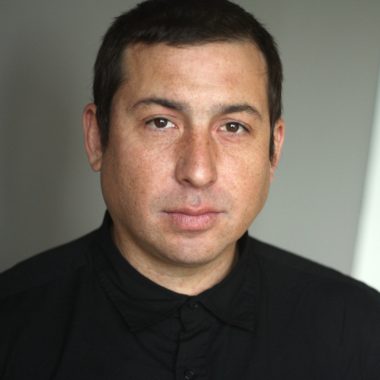
Our guest today is Tommy Orange, award-winning novelist and enrolled member of the Cheyenne and Arapaho Tribes of Oklahoma. Oranges’ debut novel, There There, centered on a Native American experience less commonly featured – namely, the lives of urban Native Americans. It was one of 2019’s most critically acclaimed books. And now, he’s written a follow-up. It’s called Wandering Stars. This new book features many of the same characters while tracing the traumatic legacies of the Sand Creek Massacre of 1864 and government-run boarding schools like the Carlisle Indian Industrial School. On February 27th, 2024, Orange came to the Sydney Goldstein Theater in San Francisco to talk to Dave Eggers. Hundreds of students and teachers attended. And among other things, Orange talked about what it’s like to have his book as a signed reading in schools. Join us now for a conversation with Tommy Orange.
Dave Eggers: How do you think it’s going so far?
Tommy Orange: Thank you, Dave. That was a really nice intro. I appreciate that.
Dave Eggers: Well, we met in Idaho maybe five or so years ago. And you were coming off, I think it was maybe six months after There There came out. So you were in the thick of it. Can you talk about what it was like?
Did you anticipate the reaction, the worldwide acclaim and the fact that it was not only an award-winning book, but one that everybody read? And that’s a really weird combination you can have, I don’t even mean that as a joke, but it is true. And we’re going to talk about readability later, but what was that like those years, that first year or so?
Tommy Orange: Can you imagine if I was just like, yes, this is exactly how I thought it would go. Yeah, I would sound insane. I was at my MFA at the Institute of American Indian Arts, graduated in 2016. There There was a thesis, it was half written. Are my S’s really sharp?
Dave Eggers: I did not notice that.
Tommy Orange: And so the director of the school said, I could get a teaching job if I published the book and I wanted to teach at the MFA. And that’s one of the base requirements you have to publish somewhere. And so the goal was to publish somewhere, University Press or something, maybe, and then make my students read it and my colleagues would pretend to have read it.
And that’s the audience that I had in mind. So everything that happened after that has been crazy. And by the time we met in Idaho, I think it was, I took my wife and son on the book tour for 30 days, a lot of different cities, six weeks in Europe. We all realized that the book tour is grueling and not as fun as it sounds.
But Idaho was fun, mostly because you guys were there. And the audience as far as people actually reading it or the range of people reading, it became a little bit later. I don’t even think when we met, there was this range that I knew about. The beginning of the tour was in New England and everyone was in AARP.
Yeah. I thought the whole tour was going to be that. And over time, it just became this thing that was taught in high schools and colleges, and it’s been this fantastic thing that I feel really honored that it connects with young people.
Dave Eggers: Yeah. Both of my high school kids, they’re both high school age.
They both were assigned it, one in eighth grade and one in junior year. And I have to, they had met you, but briefly, but they have to pretend that they hadn’t met you, and not try to look, know that, think that they had any inside scoop on the book.
But you’ve gone to a lot of high schools, and what is it like to be required reading, which is like a curse, right? There are high schoolers here, right? You say something. How many of you have been required to read Tommy? One person? Wow.
What is that experience like? Because we’ve talked about this, like the high school students that you’ve talked to also, we had required reading that we didn’t do, but you meet a lot of students that actually are digging into the book and have been changed by it.
And it does have that kind of accessibility that crosses so many generations and countries. But tell me about going to high schools and connecting with students.
Tommy Orange: When it first started, there was one very early adopter in Wisconsin. More Wisconsiners out there than people required to read the book, I guess.
And going to a high school that early in the tour and going out with There There was completely terrifying. But also the first time I realized how much I could connect to that age, or a former part of myself could connect. Because there was a kid who asked, this was like a month into the book tour, a kid who asked me, “this Thomas Frank character that you write about and this sadness that you’re writing about, he says, is that you”?
And it was so disarming, like, it’s fiction. And I ‘m a coward because I can only write what I really feel through other characters. And I’m not out there saying it as myself, but in the moment I was like, yeah. Because in a lot of ways it is.
And so since then I’ve gotten used to realizing that this age, to reach them is just, like I said, such an honor. And I wasn’t reading at that age, and no one was putting books in my hands like, you need to read this, or you’ll see yourself in this book. It was just like, I would skim books to pass tests and I probably wouldn’t pass them anyway.
And that was my whole connection to fiction at that age. So it’s been amazing to see the adoption of the book in curriculum in high schools in Oakland and all over the country.
Dave Eggers: What about abroad? When you went to other countries and you’ve seen the book in translation, what is the reaction elsewhere?
Tommy Orange: It’s all over the map. What I found most striking is other colonial countries, they think it’s really convenient to point at America as being the colonizers. And like, so the French and the Dutch,
Dave Eggers: Spanish. Yeah.
Tommy Orange: I haven’t been to Spain yet, but the French and the Dutch, and the UK, they just kind of don’t care. It’s too late for them.
Dave Eggers: It wasn’t that long ago.
Tommy Orange: There’s other colonizers, they want to point at America and especially what Americans or what happened to Native people without ever dealing with their own history of colonization. So that was a really striking thing to encounter overseas.
Dave Eggers: So you have this book that was a thunder clap, I think, in the culture. And I think you got started on Wandering Stars shortly thereafter. But it’s been a minute between the two books. And I remember when we were talking a few years after we met, you showed me an earlier draft that I thought, because I’m not as good of an editor as some people, I thought it was ready to go.
I was like, oh yeah, just do this, it’s because it was fantastic that early draft, but you took your time to make something magnificent. And you talk about it in this book, there are a number of characters in Wandering Stars who are amateur writers, aspiring writers, Orville, who was shot in There There is recovering in Wandering Stars and one of his doctors recommends writing his autobiography.
And a lot of people talk about writing as writing and waiting. Is there overlap in your own life between those themes, writing and waiting? Because in this case, you waited. Virginia Woolf used to say, “you don’t pluck the fruit from the tree before it’s ripe”.
She had finished a novel too soon. You wait till it falls. And so you took your time. And I wonder what that was like, those intervening years between There There and now.
Tommy Orange: Well, There There ended up taking six years to write and then Wandering Stars did too. Both for very different reasons.
And the draft that I sent you in maybe late 2020 I want to say, it was a very straightforward sequel. It picked up in the Colosseum and you’re with birds who are eating scraps from what’s left over at the powwow. And I’m just writing about this stillness after this cataclysmic event.
And I wrote like that for a while. And then I was asked to go on this European tour for the translation of There There, to Sweden and Amsterdam and Italy. And I was really burnt out at that point, traveling, and as cool as it sounded to go on that kind of trip, I’ve never been to any of those places.
The only traveling I did outside of the United States was because of There There. There’s a brief Vancouver trip for roller hockey, which we may get into later.
Dave Eggers: We’re going to get into roller hockey. Just put a tab there.
Tommy Orange: But I barely count that. So I didn’t want to go. And on the way to the airport, we stopped at the Oakland Museum for Lunar Festival.
And at the Lake Merritt BART Station I left all of my stuff, including my backpack with my laptop and my passport in it. If you want to talk about self-sabotage, anybody who knows the Lake Merritt BART station, could see that I was doing something. Me and my wife have joked about it, like it was almost planned, but no, I didn’t take it seriously, but I really didn’t want to go.
And so we go for an hour into the Lunar Festival and I come back out and everything’s gone. And my son Felix is, he’s in the crowd. He had a bag of toys that he really still, I think, doesn’t like that they went missing. And maybe I’ll never get forgiveness for that piece. So I thought I was going to get out of the trip and I called my agent to say “too bad”.
And she said, no, you have to go to the rest. And so I missed Italy and I went to Sweden and Amsterdam, and while I was in Sweden, they offered to take me to a museum, and I didn’t know why. And I got there and there’s this apologetic curator who takes me on this tour that eventually leads to this upper level room where he’s like, and so we have your people’s stuff and we know, and this is like the modern museum, this is their new ethos, we know we shouldn’t have it, but we don’t know how to make it right.
Dave Eggers: Wow.
Tommy Orange: So we want to tell you that we know that it’s wrong,
Dave Eggers: But here it is.
Tommy Orange: But it’s still behind glass.
Dave Eggers: Behind glass. Yeah.
Tommy Orange: And so it was there that I saw this newspaper clipping about Southern Cheyennes in Florida in 1875. And I know enough about my tribe’s history to know that they never should have been in Florida, as no one should be if they don’t have to.
But there’s a lot of history to this place. St. Augustine is the first European colony in the United States. And so I find out that there’s this prison castle where Richard Henry Pratt jailed Southern Cheyenne prisoners, half of them were Southern Cheyenne. There was Caddo and Arapaho and Kiowa people also. And this was the blueprint for the boarding schools, which went on for almost a hundred years in the spirit of “Kill the Indian, save the man.”
Dave Eggers: Yeah. Pratt, was he the inventor of such schools or pioneer of them?
Tommy Orange: Yeah. I think there was similar thinking going on, but he was sort of the father if we have to misalign fathers in that way. That’s where that started. And my tribe being at the beginning of that made me deeply interested, but that wasn’t enough to make it fit with the sequel, which was, at that point, starting right after the powwow.
And so I dove into the history and I had decided on Wandering Stars as the name for the book, for the sequel.
I had written some star things in already and then I find out that the prison castle is a star shape, it’s called a star fort. And one of the prisoner’s names is Star. And one of the prisoner’s names is Bear Shield. And that was a family from There There. And so I realized at that point that I was going to write this thing as a sort of generational saga that would end up in the aftermath of what happened at the end of There There beginning with the Sand Creek Massacre.
Dave Eggers: And meanwhile, the title came from a Portishead song, is that right? Whereas There There maybe was inspired by Radiohead a little bit.
Tommy Orange: Yeah, it was
Dave Eggers: What is it with you and nineties alt rock?
Tommy Orange: So There There was accidental for Radiohead. I had decided on, from the Gertrude Stein quote that it fit for these different reasons. And when I Googled, “There There” because I wanted to see if anybody else used it as a novel title, the first thing that shows up if you Google “There There” in 2014, is the Radiohead song. And that’s how I found that for Wandering Stars. It was literally hearing this song and realizing in a single moment. It’s an uninspiring setting where I thought of Wandering Stars, I was at a warehouse signing books.
Dave Eggers: They put you in a warehouse to just sign everything within, is that right?
Tommy Orange: Yeah. Sign all the books. And they played a Spotify playlist with the root of “There There” and “Wandering Stars” came on. And for whatever reason, I knew in a moment that I would write a sequel and it was called Wandering Stars.
Very mysterious as to why. And maybe it wasn’t a good idea. It’s yet to be told, the book just came out today.
Dave Eggers: People will tell you tonight.
Tommy Orange: I became convinced just in that moment and then all these star things started happening. And including me finding out that it comes from the Bible and not from Portishead.
Dave Eggers: Imagine that
Tommy Orange: “Wandering Stars” is from this weird little book right before Revelation where it’s this really brutal language that Beth Gibbons and Portishead took it from. And it became a way for me to explore a lot of my Christian baggage. Because I was raised evangelical Christian and even my dad who was Native American Church also prayed to Jesus.
Being able to think about Christianity and the Bible through a character who it would be completely foreign to. This character, Jude Star, at the beginning gets to think, I get to think through him about the strangeness of Christianity and this God book as he calls it.
Dave Eggers: He’s a prisoner in Pratt’s prison. And can you tell us more about Jude Star? What was the genesis of him as a character? Was he based on any research that you did or was he a pure invention?
Tommy Orange: Mostly pure invention. Star was the name of an actual prisoner at the prison castle who was a bread maker.
And I give him that quality, and he did become the chief of police. And that does happen. These are plot points that are touchstones, but a lot of the in-between stuff is completely made up.
But I grew up hearing this story about a young man running away from the Sand Creek massacre, and that was how my dad got his Cheyenne name. And I did write from the perspective of having heard this as a family story.
Dave Eggers: How did you decide when you have, there’s many, the form of the book is a series of interconnected short stories that jump through time all the way up to the present. And for me, if I can’t figure out the form, I’m stuck for years.
When did you decide on that as the form of the book and that it’s really, once we reach the present, it’s a long novella that carries us through maybe the next 200 pages. And I wonder, was that a struggle to figure out? How that was going to work. It’s an unusual structure that works beautifully.
And you don’t even know why. It’s one of those intuitive things where you don’t think about it. When you read your work, you’re never thinking about the author at work, even though clearly this structure is so sophisticated, but it’s also lyrical and fluid. I wonder, do you think a lot about that kind of stuff and rework it and rework it?
Or is it something that’s more comes, that you know right away? How are you going to structure a book?
Tommy Orange: I think part of the reason why it takes six years for me to write a book, it’s a mess, that I am by the end of it, barely able to decide if it’s actually working. And I love working with my editor and I have a lot of readers that I trust, and on long runs I’m able to get a clarity about structure for whatever reason.
I figured this out that I can’t think about structure, whether it’s working or how to restructure when I’m at the page or when I just want to think about it and try to fix it. If I’m on a long run, especially if it’s really hot, which sounds like the worst conditions for thinking.
And that’s part of it, is where I most am not thinking something emerges, and my best structural decisions and figuring out comes from running and from thinking that I’m not thinking.
Dave Eggers: And how did you decide which characters? There’s a number of characters that recur that we know from There There, starting with Orville, and he has a star-shaped wound from his gunshot wound.
And then you have Opal and Jackie and Luther and Lonnie. How did you decide who would recur in this book and who would be left behind?
Tommy Orange: I tried to bring everybody. And I have an editor who thinks about readability. And I know readers like to keep things focused and jumping around voices and having this kaleidoscopic thing, it can feel chaotic and you don’t know what, there’s only so much emotional space in every reader’s heart, to invest in different storylines.
Dave Eggers: Do you remember at your event in Idaho, there was a woman that stood up and said to Tommy during, she said, “I found your book really difficult. Why did you make that book difficult? I didn’t like reading it because it was difficult.” Do you remember this?
Tommy Orange: I do.
Dave Eggers: And it was such a shock given. And what do you answer?Like, “sorry.”
I forgot what you said, but you do thank your editor in the back for her just reminding you about readability and storytelling, but it seems something that you’re conscious of. And there’s the teenagers in the book, Lonnie and Luther and Orville speak in language that we know the teenagers speak right now.
There’s more instances of the word “hella” in this book than any contemporary literature. But then you’ll contrast that with these incredible flights of lyrical prose, some of the prettiest language I’ve ever read. Are you calibrating that all the time? Readability – making sure that readers are following the narrative, but at the same time being able to have those sort of gorgeous passages of prose.
Tommy Orange: Yeah, there was a moment when I was in the MFA, it was probably a long period of time where I was figuring out; because at the beginning of falling in love with reading and then trying to write, I wrote a lot of really bad writing as one does when you start doing anything.
And I think I was really driven by voice and stream of consciousness and this idea of thinking through writing. And that’s the last thing readers want. “We just want to hear you think out loud on the page? Why are we here?” And so I think something shifted in me in thinking about what am I here to do?
And realizing that the reader and the writer are in communion as part of the reason books exist. The reason this whole thing can be an industry and that people can come out and be interested in what people are writing is because there’s this line of communication and there’s this story to tell and there’s “make stuff happen.”
You’re making it up, so don’t be boring. You’re already making it up so you can do something that’s going to be interesting. So this idea of combining voice and elements of plot and scene that we know readers get anchored in and love, this marriage of like craft and voice and readability.
Something shifted in me to make an a concerted effort. And then working with an editor who had the same thing in mind. And she works for a big corporation who’s trying to sell books and that’s very much in line with that. And that’s not what I have in mind for readability. It’s more like I listen to the sound of sentences when I’m revising and I want to make sure they sound good.
It’s more in line with something aesthetic than it is capitalistic, but it happens to align with them too.
Dave Eggers: Do you want to read something? Read a passage?
Tommy Orange: So this is kind of a spoiler. If you haven’t read There There, although I think I just spoiled it by saying that because I don’t say the character’s name. Now it’s ruined.
This is from Orville’s perspective, the end of There There. You’re not sure if Orville’s alive. He’s alive. I’m sorry. The spoiling is done. Let’s move on.
Dave Eggers: It’s not being recorded or anything. No one will hear what you said tonight. It’ll be fine.
Tommy Orange: So this is the first instance of Orville’s first person perspective, including from There There, chapter 16, The Only Thing Alive.
“A bad thing doesn’t stop happening to you just because it stops happening to you. In therapy, this is called trauma. Opal had me doing therapy twice a week, individual and group, to make sure I had the help I needed if I needed it. That was how Opal put it to me and that I had to go. Opal was over careful about not saying that I needed therapy.
Of course I needed it, but it was more like I had to go like the way I always had to go to school and had to get good grades. Go, get. Don’t give anyone an excuse to leave you behind, to not see you, to forget you’re there. Opal averaged 10 miles a day on her mail route. So if anyone knew about not getting left behind, it was her.
We would not let what happened be the reason I get behind in school, even though school hadn’t even started yet. Opal said we would rise above what happened because bad things happening to you were opportunities, ways to find out who you were, find out what else couldn’t keep you down, and were the only way you could find out how strong you really were.
Opal got too positive after the powwow. It wasn’t like her. She’d always been so real. Positive thinking sounds stupid, but I get it. I just hated that what happened had changed her. Had changed everything. Hated it so much that some days I wish the bullet had killed me. So I needed therapy. Obviously, I needed therapy.
I’d gotten shot while I was dancing, but there was more I should have been to therapy about before my whole childhood with my mom before she died. Nobody wants to be told they need therapy, just like nobody wants to be told they got problems. Paid therapy felt better to me than some kind of free or core mandated kind.
Plus, the therapist was supposedly Native. Opal had found him on the internet. He’d said his grandmother was a full-blooded Arapaho. He looked white to me and then sometimes not. Sometimes he seemed hella Indian. Like in what he said and the way he said it, like how what Opal said could sometimes seem to come from a long time ago, and you just knew was some hard won wisdom passed down to her.
Something simple and timeless that you could actually use in your life. I’d heard the word trauma before. Everyone knows the word trauma, but when I heard it used about me, I didn’t like it. ‘All of the work we’ll be doing together will be related to your trauma response,’ Dr. Hoffman had said in our first session, ‘the four Fs,’ he said.
‘There are four kinds of trauma responses. Two of which you’ve probably heard of: fight and flight, but the other lesser known responses are freeze and fawn.’ ‘Fawn? Isn’t that like a deer?’ I said, and a yawn escaped Dr. Hoffman’s mouth, which he visibly tried to suppress by putting his fist to his nose and sort of squeezing his face like it was also a fist after which he didn’t fully yawn, but did that yawn version of throwing up in your mouth.
‘’It has to do with taking care of other people’s feelings and putting their feelings before your own. We’ll address all forms of trauma response in our healing work.’ I didn’t think healing and work belonged together, like home and work didn’t, and it felt like homework, thinking about doing healing work.
But the healing work just ended up being art therapy, like drawing and painting and drumming and writing, learning to reframe my story with writing. Dr. Hoffman wanted me to write what he was calling an autobiography, which I told him I didn’t want to write. We did physical stuff too. Went to express or exercise my pain and emotions.
Once we did a walking meditation round Lake Merritt, that felt like it took forever. Another time we went up to the hills and shot an arrow with a bow at some paper targets taped to a redwood. Calling it archery in the end was not enough to make me feel okay to be Native and shooting a bow and arrow in the woods for therapy.
But I had to admit it was kind of fun and I wanted to be good at shooting the bow and arrow as if it were some test I needed to pass, as if I should just know, like that knowledge should be in my DNA. The craziest thing we did was called reverse speech therapy. Dr. Hoffman recorded me saying stuff in our sessions and processed it with something he called Backmasking, which was just playing it in reverse from what I could tell.
Dr. Hoffman said, the back mass version was my unconscious speaking in reverse simultaneously, as I consciously said things forward. ‘You’re saying, wait, what are you saying?’ I asked, and Dr. Hoffman laughed, then coughed a cough that seemed caused by the laughter. ‘You’re saying, whatever I say, some other part of me is saying another thing, but it can only be heard if I listen to it backward?’
‘Your unconscious is a powerful, powerful part of you.’ Dr. Hoffman said. I didn’t like how he’d said powerful twice in a row, but also felt like Dr. Hoffman’s unconscious was what was behind him having said it twice in a row.
‘All humans have this ability.’ Dr. Hoffman cleared his throat, then pointed at his throat saying, ‘Double speaking is natural for our vocal chords, and true to the dual nature of reality. Think of all the ways the world is split in two: night and day, sleeping and waking, life and death, good and evil, noise and silence, darkness and light.’
As he spoke and repeated these opposites to illustrate his point, he kept flipping his palm. So it faced up and then down. ‘The unconscious way of speaking is closer to poetry and the conscious one is closer to prose.’ ‘Yeah, but like that’s like saying everybody has a split personality’.
‘’If we don’t acknowledge the unconscious, which is what it wants, then we allow it to run the show, as in dreams or worse, nightmares. And we never wake up to who we are as a whole.’ ‘Are you talking about being woke?’ I said, trying to be funny. ‘I’m talking about seeing the mind as being more than what we think we know it to be.”
I’ll stop there.
Dave Eggers: Oh, that was great.
We talk sometimes about whether or not you writing and whether art is therapeutic or cathartic for you. Is it ever?
Tommy Orange: Yeah. I think it is in more private ways. I was realizing recently, and maybe this was happening for years and you’d have to ask my wife, but she was reading something that I wrote, or I was reading it or making her listen to me read it to her, and she said, ‘you wrote this recently’.
And it was something that had existed for a long time as a part of the book that was older. So clearly I’m processing stuff that she knows about, that we talk about, that she knows that I’m working out.
But, to say just in a straightforward way, making art is therapy or writing is cathartic, I think is too simplified because as you know, so much of it is torturous and causes a lot of self-hatred and doubt. No therapist would ever recommend doing it on the level like that, what it takes to create a book that you have to keep going back to looking at your own writing.
Dave Eggers: Well, that’s the thing. I wonder, do you, did you go back and reread There There when you were starting Wandering Stars, or did you go back to it at all while writing?
Tommy Orange: I listened to the audiobook.
Dave Eggers: Wow. Did you do it yourself?
Tommy Orange: No.
Dave Eggers: Okay. So it’s an actor that did.
Tommy Orange: It was four actors for There There and I think there’s eight for this one.
Dave Eggers: That’s torturous listening to your own book, don’t you think? Don’t you hear all the mistakes?
Not that you have any mistakes in your book, but one would,
Tommy Orange: There are a lot.
Dave Eggers: Hear mistakes.
Tommy Orange: No, with professional voiceover actors interpreting the work, there’s enough of a remove where I can experience it. And if you take enough time away. I couldn’t listen to it immediately after. But there’s a lot of waiting and time away from the work that if you give it enough time, you can feel like you’re getting a fresh perspective.
Dave Eggers: Is there one of the characters, Wandering Stars is in first person, second person, third person, is there any of them that you take to more passionately, that you wake up in the morning wanting to speak through that voice or write about that character?
Tommy Orange: Not necessarily. I tend to be pretty distractable, so I jump around a lot.
Dave Eggers: Yeah. You don’t write in linear order.
Tommy Orange: Not at all. Very messy.
Dave Eggers: Yeah, don’t do that. Neither one of us writes linearly. But you should. For all of you high school students, don’t do what we do.
Tommy Orange: For organizational purposes.
Dave Eggers: It takes 10 times longer, don’t you think, to organize it?
Tommy Orange: Six years.
Dave Eggers: Yeah. There’s a passage here where, I think that Orville says that where a lot of the teenagers in the book are learning about their history, the Cheyenne history, through internet, through YouTube, and in There There Orville learns about powwow dancing in a YouTube video, and there’s a passage, if you don’t mind me reading, that says,
“How crazy it was for the internet to hold such important things like that. How, if anyone can get like holy or sacred or even just important stuff from the internet, didn’t it make the internet some kind of holy or sacred or important thing too”?
Can you talk about how you chose to have the teenagers removed from so many traditions in history, finding it in an ad hoc way through the internet.
Tommy Orange: Yeah, so, the kind of research I did for both books had more to do with what would there be for the characters to find because I didn’t have the same relationship as the characters to my culture.
I grew up with a father whose first language was Cheyenne and was always very clear to us who we are. But I knew this type of disconnection existed and the imagining, and to these characters required that I look up what would it be like? Also, there were things that were missing from what my dad didn’t tell us.
For instance, in the prologue, there’s this old Cheyenne story about a rolling head that’s a super weird story. And it happened to fit with this Indian head prologue that I wrote for There There, I found the telling of my great-grandfather telling it in the traditional way online.
And my dad’s dad didn’t accept him as a son. So that was a broken piece, we never would’ve got that. But the internet allowed.
Dave Eggers: You just came across it.
Tommy Orange: That I access it. I came across it. But for the most part, I have these kids looking at what is there. And the internet is full of the most garbage sites about Native people.
Just this ridiculous stuff. But also there’s tribes that do a really good job of keeping up oral traditions and record keeping. And so as you read, the internet contains the world now, it’s big enough that the whole world is in it. So it’s become more important than just this like nineties version of people with their own weird interests putting up these bad pages that some people would go see and serving as a way to do mail in a more convenient way.
It’s become this whole thing that we have moved ourselves inside of.
So thinking about these kids thinking about their heritage and what they belong to through this sort of ever expanding infinite portal just seemed really interesting to me. And honestly a way, there’s a generation now that goes to the internet to ask sincere questions, I think they’re too afraid to ask anybody else. And there’s no judgment when he asks the internet questions. And I think that’s part of what I wanted to explore too.
Dave Eggers: Orville in this book, he’s recovering from this gunshot wound and he is given painkillers freely, and he finds himself enjoying them a little too much and having a hard time weaning himself off.
And meanwhile, he meets a friend, Sean, whose father is hand-making drugs in the basement, basically, and eventually moving into the fentanyl realm. Did you know early on that you were going to touch on that issue when you were writing it? Because it grew over the six years that you’ve been writing, the prevalence and the epidemic of fentanyl has exploded every year.
When did you know that would be a part of it and an addiction as a whole? Was that always a central theme?
Tommy Orange: It was. As soon as I thought about the sequel, a lot of the layers that I was thinking about were related to, with mass shootings or shooting events, we get a headline and we get a number, and a lot of times we focus on the psychopath and we don’t really get the intimate story of like, how does a kid recover from experiencing that?
And it wasn’t only that, but he was in regalia, he was dancing something that comes from a long time ago, it was this part of this powow tradition that was disrupted by gunfire. So it had historical echoes while also having this mass shooter piece in thinking about how one might recover from that and interfacing that with what they would’ve been given in the hospital.
There was an organic progression that led me to thinking about what would that have been like for him, and then also wanting to make more complex this addiction thing, which often is seen as just a moral failing. He’s like, I could feel things more when I took the drugs, stuff that I was hiding from childhood that I couldn’t feel. The drugs made me feel more, and a lot of times it’s like people take it to escape or to numb.
And so I wanted to expand this idea of what addiction is about and why people go to it and expand, or attempt to expand, the reader’s compassion for why people get caught up in addiction. Because it’s so often just this black and white, like you’re good if you don’t do it or if you get into recovery, and you’re just a bad character because you can’t help yourself, if not. Instead of looking at a lot of the reasons why people go to it in the first place.
Dave Eggers: Also your approach to recovery is complex. There’s no easy stories of somebody easily, quickly recovering and they mend all of their relationships and they go into a simpler, happier future in every way.
Even then with Jackie, with Opal, everybody that’s struggling with addictions of one kind or another. It’s not an easy path. We don’t finish thinking, not to spoil it, but thinking that it’s going to be so much easier. Is that, I don’t know. Can you talk about how you approach that part too? The recovery part?
Tommy Orange: Yeah. Again, addiction narratives, which we spoke earlier about, tend to be simplified. There’s this writer lifestyle that we’ve heard about, where the drunk, or the Hunter S. Thompson, the Hemingway is sort of romanticized as that’s just who they are.
Or there’s the good and the evil. Somebody falls down and they get up and they find recovery. And then that’s the way. And I think addiction is, anybody who’s been affected by it is very messy. And it’s also more widespread than we all admit. And I think a lot more people struggle with these things that compel us towards self-destruction and obsession, which is tied to addiction, than we would all like to admit.
I think it’s an uncomfortable issue and the people that take a lot of the brunt of it are like the easily identified, look at the crazy crack head, look at the drunk Indian, look at these people who can’t help themselves.
But it’s really more widespread and complex than we all would like to admit, I think. And I think exploring the recovery piece, wanting to bring the complexity to that too. For some people it looks a lot of different ways. It’s not black and white. That was when I was there and then now I’m better because of A, B, or C.
Dave Eggers: Yeah, I think you wrote about it better than anything I can remember. It’s beautiful. The last 120 pages of the book, I didn’t move. The book builds such an incredible power that it just seizes you, and it comes into this sort of symphonic level of all of the voices intertwining, but also just the grace that you give all of these characters that are struggling is extraordinary.
Which brings us to rollerblading and roller hockey. It figures in a little bit in the book, but it figures into your life too.
Tommy Orange: Well, the word grace, it figures in more than you would know, because my mom famously said to another parent, or to one of my teammates watching me skate, “isn’t he graceful?”
It’s the worst thing you could say. I’m playing hockey. I wasn’t a rollerblading figure skater, which there’s nothing wrong with that. I was playing hockey and trying to play hockey.
Dave Eggers: But you thought this might be a career.
Tommy Orange: Yeah. Oakland had a professional team called the Oakland Skates.
Dave Eggers: I never knew this.
Tommy Orange: This was in the 1990s. We would,
Dave Eggers: People would pay money to see them.
Tommy Orange: So, my best friend Mario’s in the crowd. And him and his dad would go to games because the most amount of fights, aside from maybe like an MMA sort of thing that you would go to, would happen at a roller hockey game.
So the Oakland Skates, especially when they played the San Jose Rhinos, there would be 20 fights that would break out. And these are like real brawls. You throw the helmet off, you try to pull the jersey over the head and then do the upper cuts. This is a hockey fighting style.
So that’s what I wanted to do. Not the fighting part. But it seemed like that could be something that could happen. I got sponsored by a company when I was 16.
Dave Eggers: Wow.
Tommy Orange: And we started travelling, between 16 and 24 I was doing tournaments and competing at a high level. And it seemed like,
Dave Eggers: sorry, this just sounds like an oxymoron there.
Tommy Orange: It sounds ridiculous. And it is ridiculous. The sport died.
Dave Eggers: How did it die?
Tommy Orange: It died in the most pathetic way imaginable. It was already a goofy thing, rollerblading, but it died in Huntington Beach in LA on ESPN
As many
Dave Eggers: things do. Yeah.
Tommy Orange: Live on ESPN. They decided everyone would wear short shorts, neon pads. They put ramps in the back. They took away pucks and put in balls and they put it on ESPN, like it was going to be some new thing. And everyone was like, well, that’s the end. And just turned the channel or turned off the TV because it was too much.
Dave Eggers: And there died your dream too. That’s too bad.
On another lighter note, tell us about your encounters with GQ, Wes Studi, and a fake movie that might have become a real movie.
Tommy Orange: It was during the pandemic. I was asked to write a profile of Wes Studi.
Dave Eggers: He is a famous actor. You’ve seen him in a lot of movies.
Tommy Orange: Was it a light round of applause or somebody just cracking their knuckles?
Dave Eggers: He’s amazing.
Tommy Orange: So I wrote a profile about him for GQ and at the end of it, just made a joke, like he’s our premier actor and somebody should write a movie for him the way we write movies for Matt Damon or, Matthew McConaughey, whatever these movies that are like, this was written for these people.
Dave Eggers: Yeah.
Tommy Orange: And I made up a movie at the end. I said, have it be a poet who travels across the country and robs banks and then writes poems about robbing banks.
Dave Eggers: On roller blades. Was that part of it?
Tommy Orange: He’s a little bit too old for roller blades. So the director, who I had interviewed about Wes Studi, called me up and said, are you serious about this movie?
And it turned into a zoom meeting with a studio. And then we sold it in the room, which is a phrase I learned in the room as we sold it. And then they paid me to write a screenplay, which took me a long time to figure out how to write, because novel writing is maximalism and screenwriting is minimalism for the most part.
There’s different styles, but to move from novel writing to screenwriting is to take away all of the extra and just have the bare bones scenes that all the writing teachers want you to write.
Dave Eggers: Yeah.
Tommy Orange: Just get the scenes in. And so I finished the thing pretty recently and sent it off and the director and producer love it.
And it may become a movie.
Dave Eggers: That’s crazy. And it looks like There There might be on its way into being
Tommy Orange: A television show.
Dave Eggers: Realized. Yeah.
Tommy Orange: Yeah, we’re at a place where there’s a full pilot script and they’re talking about selling it to one of the streamers.
Dave Eggers: Well, Hollywood’s very cyclical and very cynical too.
And so when they have movies like Reservation Dogs has been a phenomenon. And then Killers of the Flower Moon suddenly. Do you think that there’s, in a cynical way, that there’s money now for Native stories?
Tommy Orange: So we’ve had many Native Renaissances over the years. One of them came after Dances With Wolves swept the Oscars.
It sounds ridiculous. But it truly opened up opportunities for Native people to tell their stories. Yeah. And so I want Lily Gladstone to win the Oscar because that would be great for Native people.
But in a way, I want Killers of the Flower Moon to sweep the Oscars because I want more doors to be open for Native stories to be told. It’s a whole other conversation around the movie and other people telling our stories and their attempt at – it’s a whole different conversation that we’re not going to have right now.
It’s a really good thing if it sweeps. For Native stories and opportunities for Native people.
Dave Eggers: We’re at the point where we’re going to take some questions from the audience and we especially want to hear from the high schoolers who are here. So there’ll be people moving around with microphones. So anything you want to ask especially if it pertains to roller hockey. We’re looking for deep cuts about roller hockey.
City Arts & Lectures: Why don’t we take this first question on your left.
Audience Member 2: Hi Tommy. My name is Indira, I’m a high school librarian and, Lake Merritt, thank you. Just have to say, Lake Merritt’s my BART station too. So sorry you were jacked there.
Your book There There is not required reading for our students yet, but I recommend it quite a bit and it does get returned quite a bit because it’s hella confusing.
So I’d love to hear you, I’d love to be able to quote you and say, well, this is what the author says, hang in there or keep reading it or, I think it’s really important you try, we read it for our staff book club. My dear colleague Brenda here, made a whole character web. It was amazing.
So just, because I want them to read the story, I want them to get into it. And I’d love to carry Wandering Stars, but I got a comp ticket so I didn’t get a book. But I would love one. You can make that happen. Thanks.
Tommy Orange: I think so much of the way we teach narrative is like a singular hero story.
And so by the time a student might get to this multi POV or coral or kaleidoscopic or whatever way you want to frame, not the hero story and jumping around to different perspectives, I think it can be jarring.
We also are a very individualistic minded society and culture in the US. And maybe it’s a failing of my writing and my style that characters aren’t different feeling enough.
And that can be confusing. That could be part of it too for whatever the student’s experiencing. I like reading novels that are from a lot of different perspectives and figuring out how they all connect. And that’s a taste thing. And maybe that’s part of it too, that somebody wants something linear or singular in voice and that’s what they want to track.
And there’s nothing wrong with that. I happen to write what I like to read, and that’s where the decision came from for both books. I think you have to write what compels you and you write in the style that you like to read. And there’s books that I’ve loved that I’ve read later and realized I don’t like, and there’s books that I haven’t liked and years later I’m like, I don’t know what was wrong with me, to not see how brilliant that was.
So reading is also about timing and so it’s really hard to speak definitively about what’s wrong with the book. My book, what’s wrong with the reader? Wrong is not the right word.
Dave Eggers: What’s wrong with you? That’s a question you could ask first. But sticking with it, having been a very reluctant reader myself when I was in high school, sticking with it is everything, if that helps at all.
Where’s our next question?
City Arts & Lectures: This is on your left. Far left.
Dave Eggers: Oh, that left.
Audience Member 3: Hi, my name is Metsly and I’m reading your book in my Narratives of US America class right now. But it’s been a beautiful experience to connect to a book in a way that I have never before. And I just wanted to ask, the Native community, there are a lot of issues that you can touch on through your characters and everything. How did you choose what topics and what struggles you would touch on that touch the Native community?
Tommy Orange: I don’t know that I’ve made decisions that were as analytical as that. I write from the inside out and think about the interior of a character first before I put them in a scene or have them interacting with some kind of issue.
I worked in the Native community for almost a decade and part of that was in data and it was all in the behavioral health department. So I was aware of a lot of things affecting Native communities, and I didn’t set out to write a polemic or an essay thing where I’m bringing up issues and just using characters to talk about the things that I want to talk about.
Those things came through because I care about them and I know they’re things that affect actual Native lives, but I didn’t choose, like, I want to talk about missing and murdered Indigenous women here. So I’m going to put this chapter right here that came through, like in There There a character named Blue, because it’s important.
So I can’t say that I was making decisions on that level. But there certainly are issues that affect us more than others and I would be more compelled to write about those things than other things, if that makes sense.
City Arts & Lectures: The next question is right center.
Audience Member 4: Hello, my name is Vita. I am working on a novel about growing up in the poor parts of Oakland in the sixties and the seventies. And when I read There There I instantly identified with the narrator’s voice. It sounds very much like mine. How did you find that narrator’s voice and who is it?
Tommy Orange: I don’t know, fiction comes from a mysterious place. I was born in 1982. My parents didn’t necessarily go through that same thing. My dad definitely grew up in poverty in Oklahoma, but not in Oakland. I spent a lot of time with people from Oakland and I did storytelling work that, I was told stories from the community, but I also was very careful not to use people’s stories, because people’s stories are earned through their experiences and that comes with a lot of hardship.
So I definitely wasn’t taking somebody’s story that I had heard and just fictionalizing it. It all comes from the place that fiction comes from in imagining into, there’s a composite influence from working in the community for many years. That is part of what is influencing it.
And then in revision, I’m thinking, does this feel real? But it’s definitely not like Opal’s story comes from community member blank, because I thought that was the most interesting story to use. Even in the language. Use somebody’s story in the language. It’s right, that takes somebody’s story.
It never would’ve felt right. And I made an effort when I was writing the book to try not to do any of that if, does that make sense? So it’s not a good answer because I don’t know where some of the voices come from. When you write fiction and when you’re interfacing with realities, imagination just tries at what that might be like.
And sometimes it works and sometimes it doesn’t.
City Arts & Lectures: This question’s at the back on your left.
Audience Member 5: Hey, how you doing Tommy? I’m Xavier, I don’t know if you remember me, but you came to speak to my students. They interviewed you at Madison Park Academy in East Oakland. I think it was last school year.
Tommy Orange: Yeah. On KQED public radio dropped an F-bomb accidentally describing something that happened after that in the parking lot. That sounds wrong.
Audience Member 5: Sounds about right.
Tommy Orange: I’ll tell you real quick. One of the students, I was on the way to the car and I’m always scared of high school kids.
Audience Member 5: Me too. Kidding.
Tommy Orange: And he called out to me as I was about to get to my car. He is like, “hey.” And I turned around and he was like, “I fuck with your book.”
And I said that on KQED and I look into the control room and I see the producer just throws her arm up. And I think that I had just, I’m in the car with a parent and their kid driving to school, I’m like, this is publicly.
Audience Member 5: I love that. I love that you had that experience, and I love that a student was able to express that to you and give you that review.
So a great review from a kid, I would say. Especially in that part of town. I was wondering, as we read that book, we also read, An Indigenous People’s History of the United States for Young People, just so they could have some context and understanding. So we paired those together.
They hated me for it, but we paired those together. And I was wondering if you had to teach this book, like if we switch roles and I became a writer, you were the teacher, what would be some essential questions? Basically what would you want kids to get out of it? What would be some major questions you would ask kids, and what would you want them to get out of reading this book?
Tommy Orange: I think you mean my book and not the Indigenous People’s History, right?
Audience Member 5: Yeah.
Tommy Orange: I think having a critical lens on the rest of what they learn about Indigenous people. Excluding what you’re doing, where they find themselves in the work and what the institutions in this country have invested in either telling the wrong stories as they probably heard from most of the rest of their education, like the Pilgrim Indian story alone.
The wrong stories or the missing stories, reflections on what are the important parts of bringing up these stories that haven’t been told or have been told wrong or have been sterilized, and having a critical lens on what does a country, what does a nation want to tell?
What story does it want to tell about itself? And learning how to question that with a critical lens. I think I would focus on that and looking at what characters they connect with and why in terms of identity, maybe.
City Arts & Lectures: This next question’s in the center orchestra.
Audience Member 6: Hi, my name is Layla and I’m a high school student, and we’re actually reading There There in my class right now.
Dave Eggers: Yay!
Audience Member 6: We’re only a few chapters in, but I’ve really enjoyed how beautiful the language is and how you’re able to create such distinctive voices for each of the characters, as well as what you’re able to do with the writing and how that reflects each of the different themes or emotions that you’re able to get across.
So I was curious, when you’re writing, how much of that playing around with syntax or style is conscious on your part, and how much of that just naturally comes through with you as a writer?
Tommy Orange: That’s an amazing question.
Dave Eggers: Yeah. Well done.
Tommy Orange: I think, and I’d love to hear your response, Dave. Writing is weird because a part of it, a lot of writers want to take credit for, I’m brilliant and I intended all of this. But it’s a collaboration with a part of you that you don’t know what you’re going to say otherwise.
You would just speak it into a thing that would dictate all of the thing if you knew exactly what to say and what you want. But a part of it’s like, “hmm.” And then you read what came out, right? So that’s a mysterious thing. And some of it’s like, I know what I want to get at, but it’s still like, okay, the interim is this weird finger spell that we want to call like a writer in control.
Dave Eggers: Finger spell. That is really good. That’s what it is. Yeah. And especially how you write, I think.
Tommy Orange: So it comes out and then you decide. On some of my best days where I think I wrote the best thing ever, I look the next day and I’m like, this is complete garbage.
And then I’ll have really bad days and I’ll look back weeks later, because I won’t look at it the next day because I already think it was a bad day. And I’ll find something really useful and something really distinct that will have some kind of voice that I don’t feel like comes from me. And I think some of the best stuff should feel like it’s least like me.
So it’s a mixed bag. Revision sometimes is my aesthetic or my vision and I know what I’m trying to control. And then there’s times when the best thing that could come from me is the thing that feels the least like me. And that’s not just because I hate myself a lot of the time it’s because you’re drawing from a place that should not feel like you. And that’s part of the creative process. And the mystery of it.
Dave Eggers: It’s that aphorism “write what you know,” which is the worst canard that has ever happened to literature. And there’s a better one that says “what you write should be bigger than you.” And I think that you do that with your symphonic way, with voices and layers and interlocking stories.
Will you read a passage to close us out?
Tommy Orange: Yeah.
Dave Eggers: It doesn’t give anything away, but it’s at the end when Luther is writing his story. And it’s one of the prettiest passages, these last few pages, that I’ve read in decades. Whatever part of it you want to read.
Tommy Orange: Thank you. I think I’m starting here right to there.
Dave Eggers: Yeah. Or keep going. Whatever you feel.
Tommy Orange: So he is writing a letter to his family. This is what I’m reading. I won’t tell you any other context because there would be a little bit of spoiler in that.
“Let me try again. I was a boy and our family had just started to feel all right, like we were moving towards something bigger than we’d ever been with Orville dancing and us brothers riding our bikes together.
It felt like the beginning of something and I was okay with what happened. We had a chance to get better together. That’s the only good thing about getting hurt, is that if it happens together, we have a chance to heal and get better together, which is a chance to get stronger than you ever were before.
Healing is holy. And if you have the chance to not have to carry something alone with people you love, it should be honored. The opportunity should be honored. And you all got selfish about it. You all got scared it was going to be bigger than our love. And then it was.”
Dave Eggers: We thank Tommy Orange. Congratulations.
Tommy Orange: Thank you, Dave.
Dave Eggers: Please read this book.
Tommy Orange: Thank you all.